


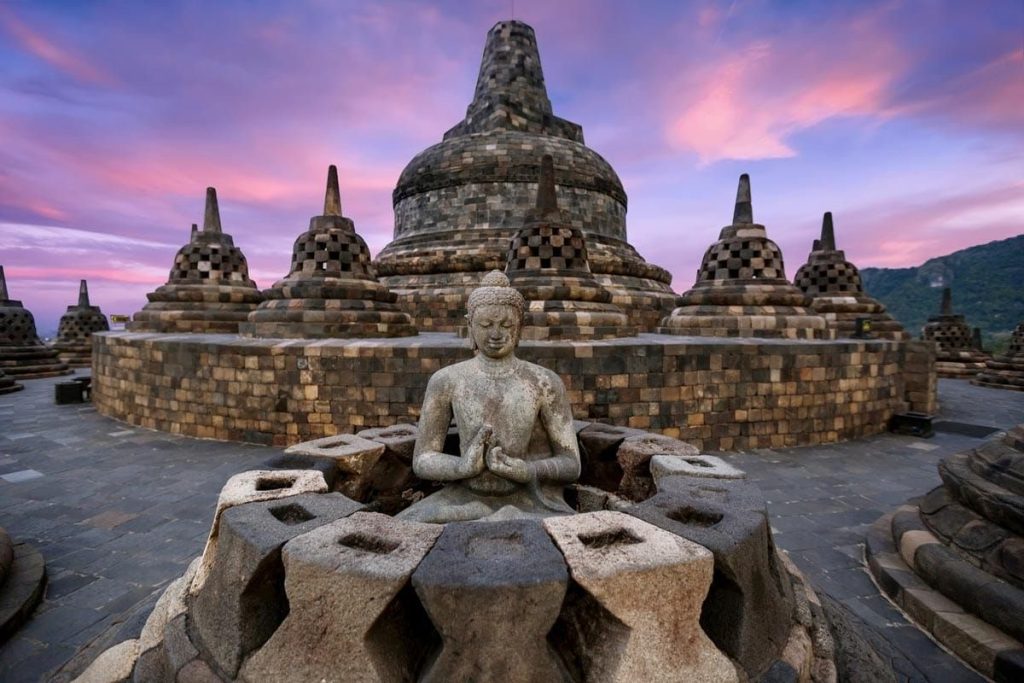

Borobudur: A Marvel of Architecture and Historical Heritage
Borobudur, a stunning ancient architectural masterpiece in Magelang, Central Java, Indonesia, stands as one of the largest Buddhist temples in the world. This UNESCO World Heritage Site is not only a symbol of cultural and spiritual magnificence but also a testament to the ingenuity of Indonesian ancestors in creating a monumental structure that has endured through the centuries.
History and Origins of Borobudur
Borobudur was built during the Syailendra Dynasty, around the 8th to 9th century CE. Dedicated to Mahayana Buddhism, it is believed to have been completed under the reign of King Samaratungga. The name “Borobudur” is thought to derive from the Sanskrit term “Vihara Buddha Uhr,” meaning “Buddhist monastery on a high hill.”
The construction of Borobudur utilized over 2 million blocks of volcanic stone (andesite), assembled without any adhesive but using advanced interlocking techniques. The temple is situated on a hill, surrounded by lush landscapes of rice fields and mountains such as Mount Merbabu, Merapi, Sindoro, and Sumbing.
Architectural Brilliance
Borobudur’s structure is a masterpiece of design and symbolism. The temple takes the form of a mandala, a Buddhist representation of the cosmos, comprising three main levels:
- Kamadhatu: The base level, representing the world of desire. The reliefs on this level depict human life filled with passions and temptations.
- Rupadhatu: The middle level, representing the world of forms. This level features intricate galleries of reliefs illustrating the stories of Buddha’s life and teachings.
- Arupadhatu: The upper level, symbolizing the formless world. This area is crowned with smaller stupas encircling the grand central stupa at the top.
Borobudur houses over 2,600 carved relief panels and 504 Buddha statues, making it one of the most extensive collections of Buddhist relief art globally. Each carving is imbued with deep spiritual and moral significance, providing guidance on Buddhist teachings and the path to enlightenment.
Rise, Decline, and Restoration
After centuries of prominence, Borobudur was abandoned and forgotten, buried under volcanic ash and overgrown vegetation. It was rediscovered in the 19th century by Sir Thomas Stamford Raffles, the British Governor of Java.
A major restoration effort, supported by UNESCO, was undertaken in the 20th century. Spanning over a decade (1973–1983), this project successfully restored Borobudur to its former glory, preserving it as a cultural and historical treasure for future generations.
Spiritual and Cultural Significance
Borobudur is more than just a tourist attraction; it remains a sacred pilgrimage site for Buddhists worldwide. The temple hosts the annual Vesak celebration, where Buddhists gather to commemorate the birth, enlightenment, and passing of Siddhartha Gautama, the Buddha.
Modern-Day Appeal of Borobudur
Today, Borobudur stands as a proud symbol of Indonesia’s cultural heritage. The temple is particularly mesmerizing during sunrise or sunset, offering visitors breathtaking views and a profound sense of connection with history and spirituality. To preserve its legacy, conservation efforts are ongoing, and visitor numbers are carefully managed to protect the temple’s delicate structure.
Conclusion
Borobudur is a timeless reflection of ancient glory. Its architectural grandeur, spiritual depth, and historical significance make it one of the world’s greatest treasures.
For those seeking a journey that intertwines cultural wonder, historical intrigue, and spiritual enlightenment, Borobudur is an unmissable destination.


Leave a Reply