


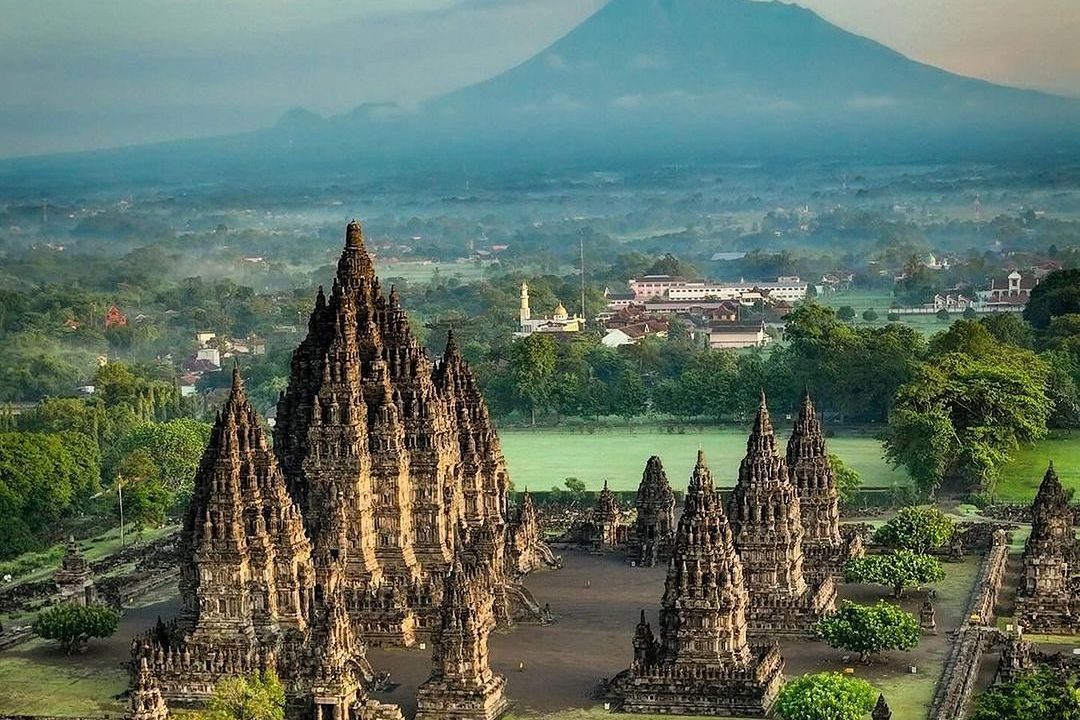

Overview of Prambanan Temple
Prambanan Temple, also known as Candi Prambanan, is a majestic 9th-century Hindu temple complex located in Central Java, Indonesia. It is one of the most important and iconic historical and cultural sites in Southeast Asia and a UNESCO World Heritage Site. The temple is dedicated to the three principal deities of Hinduism: Shiva, Vishnu, and Brahma. Situated approximately 17 kilometers east of Yogyakarta, Prambanan is famous for its stunning architectural design, intricate carvings, and the grandeur of its temples.
This impressive temple complex is the largest Hindu temple in Indonesia and one of the largest in Southeast Asia. Prambanan has become a popular destination for tourists, historians, and religious pilgrims alike, offering a glimpse into the artistic and spiritual heritage of ancient Java.
Key Features
-
Majestic Architecture: Prambanan is known for its towering temples, which rise up to 47 meters (154 feet) in height. The central temple dedicated to Lord Shiva is the largest and most striking. The temples are designed in the Shivaite style of architecture, characterized by vertical and slender structures that symbolize Mount Meru, the sacred mountain in Hindu cosmology.
-
Intricate Carvings: The walls of the temples are adorned with intricate bas-reliefs that depict scenes from the Hindu epics, including the Ramayana and Mahabharata. These carvings tell the stories of gods, goddesses, and heroes, and offer valuable insight into the culture, mythology, and religious practices of the time.
-
Three Main Temples: The Prambanan complex consists of three main temples dedicated to the Trimurti:
- Candi Shiva Mahadeva (Shiva Temple): The largest temple in the complex, dedicated to the god Shiva.
- Candi Vishnu: The temple dedicated to the god Vishnu, located to the north of the Shiva temple.
- Candi Brahma: The temple dedicated to Brahma, located to the south of the Shiva temple.
-
Other Temples in the Complex: In addition to the three main temples, Prambanan also contains a series of smaller temples, which are believed to be dedicated to other deities, such as Durga, Ganesha, and Agastya. Many of these temples were originally constructed as shrines to honor Hindu gods.
Activities to Enjoy
-
Exploring the Temples: The primary activity at Prambanan is to explore the temples themselves. Walk through the expansive complex and marvel at the towering structures, detailed carvings, and the magnificence of ancient Javanese architecture. Don’t forget to take your time to admire the bas-reliefs that illustrate Hindu myths and stories.
-
Cultural Performances (Ramayana Ballet): One of the most popular activities at Prambanan is attending the Ramayana Ballet. This outdoor performance takes place in the open-air theater next to the temple complex and tells the epic story of the Ramayana using traditional Javanese dance, music, and dramatic storytelling. The performance is set against the backdrop of the Prambanan temples, creating a magical and unforgettable experience.
-
Photography: Prambanan Temple offers stunning photo opportunities. The temples’ towering spires, beautiful carvings, and the expansive view of the complex against the sky make for excellent photography. Sunrise and sunset provide especially dramatic lighting for capturing the beauty of the temples.
-
Historical Learning: For those interested in history and archaeology, Prambanan provides a rich source of information. Visitors can explore the site’s museum to learn more about its history, the restoration process, and its role in Javanese culture. The museum houses various artifacts, sculptures, and educational displays that help visitors understand the significance of the temple complex.
-
Walking Tours and Guided Visits: Hiring a local guide is a great way to explore Prambanan. A knowledgeable guide can provide detailed information about the history, architecture, and religious significance of the temples, as well as share stories about the myths and legends behind the bas-reliefs.
Best Time to Visit
-
Early Morning or Late Afternoon: The best times to visit Prambanan are in the early morning or late afternoon. The temples are less crowded, and the lighting during these times is perfect for photography. The weather is also cooler during these hours, making it more comfortable for walking around the complex.
-
Dry Season (April to October): The best time to visit is during the dry season from April to October, when the weather is pleasant, and rain is minimal. This is the ideal period to explore the temples and enjoy outdoor performances such as the Ramayana Ballet.
-
Avoid Peak Hours: To avoid large crowds, it’s recommended to visit early in the day or later in the afternoon, especially if you’re visiting during the high tourist season (July-August or public holidays).
How to Get There
-
From Yogyakarta City: Prambanan is located about 17 kilometers east of Yogyakarta, making it easily accessible by car or motorbike. The drive takes around 30 minutes. Taxis, Grab, or private transport are common options for reaching the temple.
-
Public Transportation: Public buses also run from Yogyakarta to Prambanan. You can take a bus from the city’s Gianti Bus Station or Jombor Bus Station. Alternatively, minibuses or “transjogja” (public transport) also provide easy access to the temple complex.
-
Tour Packages: Many local travel agencies in Yogyakarta offer guided tours that include transportation, a guide, and visits to multiple historical sites, including Prambanan, Borobudur, and other nearby attractions.
What to Prepare
-
Comfortable Footwear: Since Prambanan covers a large area, it is advisable to wear comfortable shoes for walking. The complex can involve a fair amount of walking, especially if you plan to explore all the temples.
-
Camera/Smartphone: Prambanan offers excellent photo opportunities, so don’t forget to bring a camera or smartphone to capture the beauty of the temples and the surrounding area.
-
Sun Protection: As Prambanan is mostly an open-air complex, it’s a good idea to bring sunscreen, a hat, and sunglasses to protect yourself from the sun, especially during midday visits.
-
Water and Snacks: Bring a bottle of water, as the weather can be hot, and stay hydrated. There are also cafes and food stalls near the temple complex if you need refreshments.
Accommodations
There are various accommodation options in Yogyakarta, which is the nearest city to Prambanan. Yogyakarta offers a wide range of hotels, guesthouses, and homestays, ranging from budget to luxury. Staying in the city provides easy access to Prambanan, as well as other attractions like Borobudur and Kraton Yogyakarta.
If you prefer staying closer to Prambanan, there are also several guesthouses and hotels near the temple complex that offer convenience and a more relaxed atmosphere.
Travel Tips
-
Respect the Site: As Prambanan is a sacred site, it is important to be respectful of the religious and cultural significance of the temples. Dress modestly and behave respectfully while in the temple area.
-
Prepare for Heat: The weather in the area can be hot and humid, so wear light, breathable clothing and stay hydrated. It’s also a good idea to visit during early morning or late afternoon to avoid the midday heat.
-
Guided Tours: Consider hiring a local guide to gain a deeper understanding of the temple’s history and significance. A guide can provide valuable insights into the mythology behind the bas-reliefs and the temple’s architectural features.
-
Combine Visits with Nearby Attractions: Prambanan is near other notable attractions, such as Candi Sewu, Ratu Boko Palace, and Borobudur Temple (though Borobudur is a bit farther). A day trip from Yogyakarta often combines visits to Prambanan and these other UNESCO-listed sites.
Nearby Attractions
-
Candi Sewu:
A short distance from Prambanan, Candi Sewu is another significant Buddhist temple complex. It is often visited together with Prambanan, offering a different architectural style and a glimpse into the history of Javanese Buddhism. -
Ratu Boko Palace:
Located near Prambanan, Ratu Boko is an ancient palace complex that offers panoramic views of the surrounding area, including Prambanan. The site is known for its ruins, including gates, walls, and ponds. -
Borobudur Temple:
While a little farther from Prambanan, Borobudur is one of Indonesia’s most famous landmarks. This 9th-century Buddhist temple is a UNESCO World Heritage Site and is often visited along with Prambanan.
Prambanan Temple is a must-visit destination for anyone traveling to Yogyakarta. Its stunning architecture, historical significance, and cultural beauty make it one of the most impressive temple complexes in Indonesia and Southeast Asia. Whether you’re interested in history, culture, or simply exploring the beauty of ancient Javanese architecture, Prambanan offers a rich and rewarding experience for all types of travelers.